
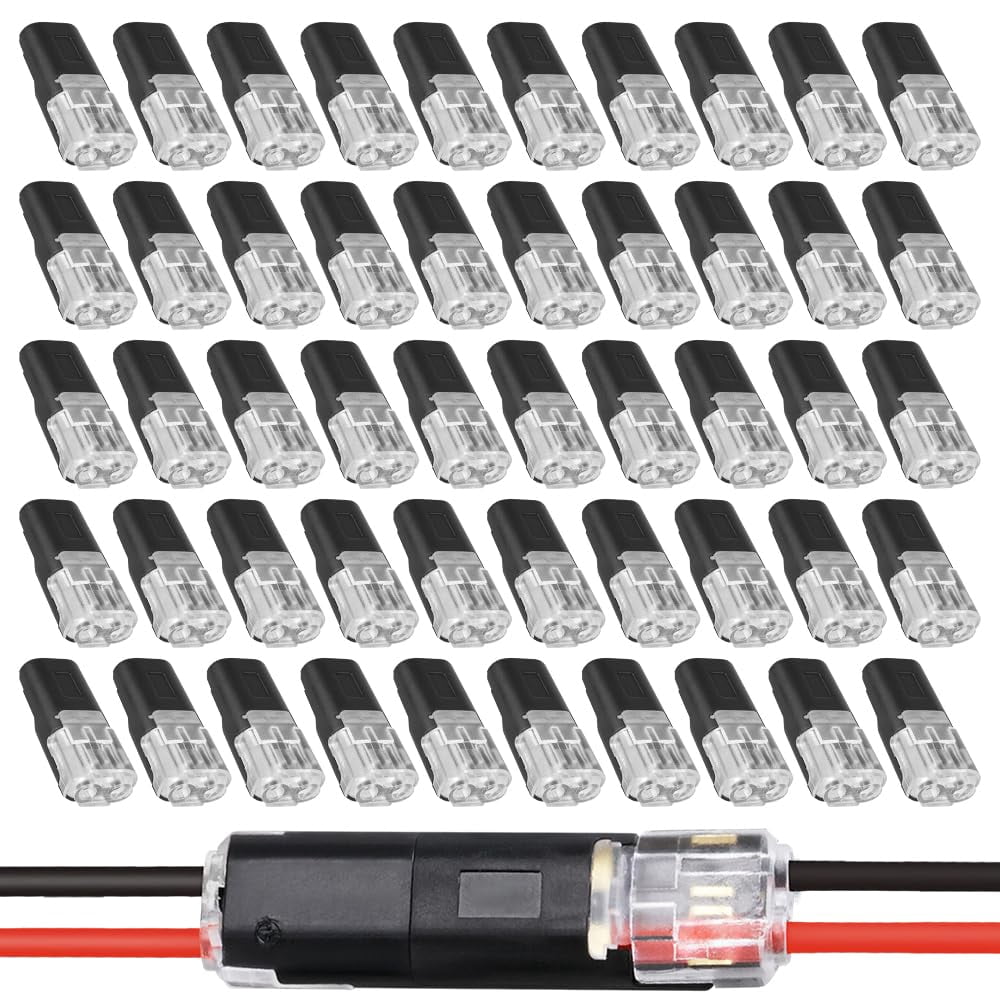
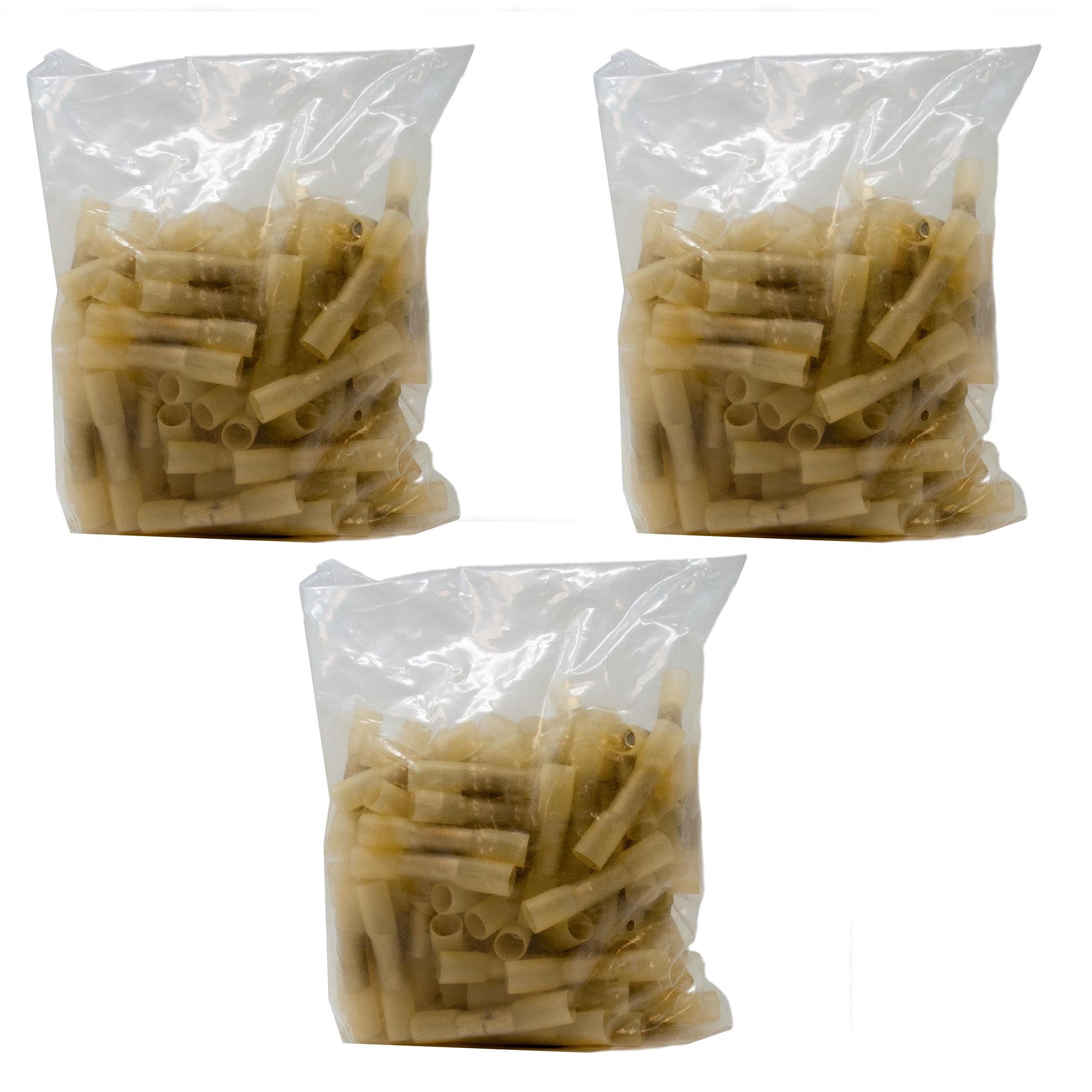
Dual-Wire Insert-Type Wire Connector with Locking Latch — Flame-Retardant, Self-Locking Quick-Connect Terminal; Suitable for Emergency Repairs, Home, and Automotive Wiring; Easy to Use.(Black50PCS)
Product details
| Management number | 237957401 | Release Date | 2026/07/11 | List Price | US$8.40 | Model Number | 237957401 | ||
|---|---|---|---|---|---|---|---|---|---|
| Category | |||||||||
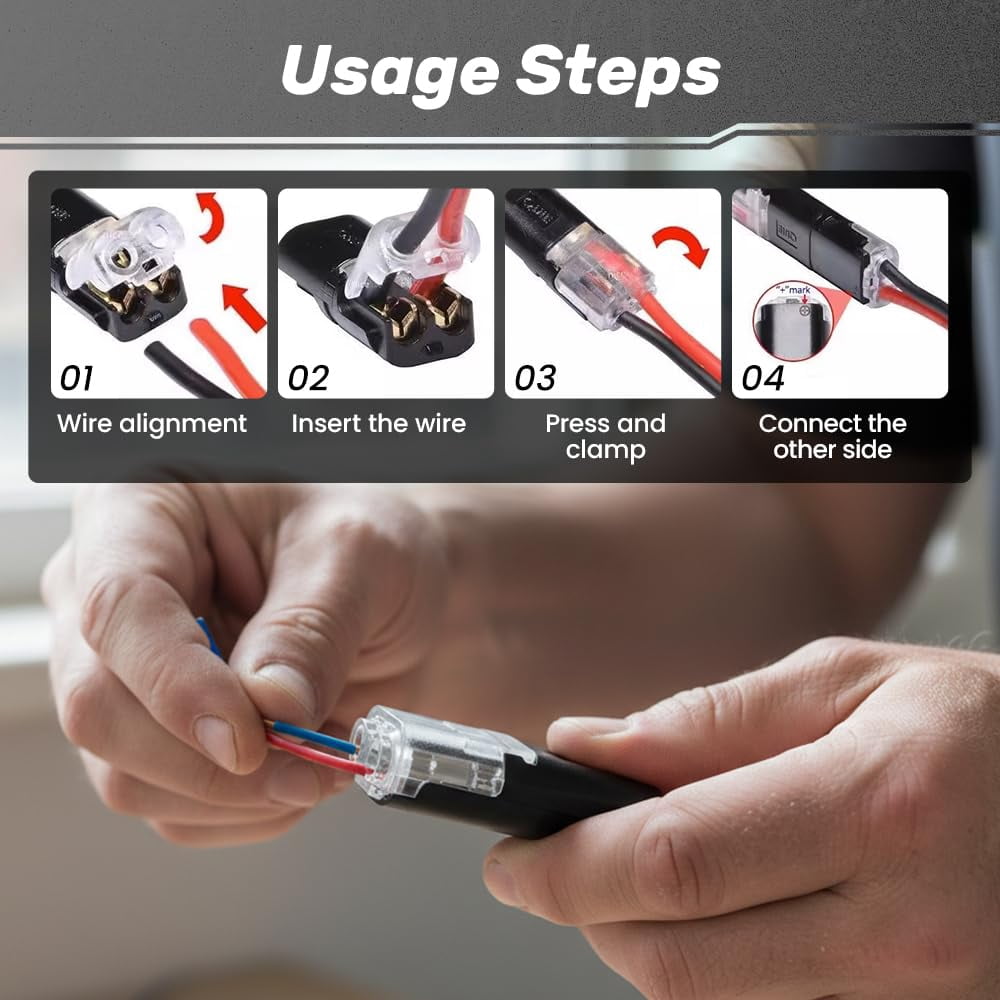
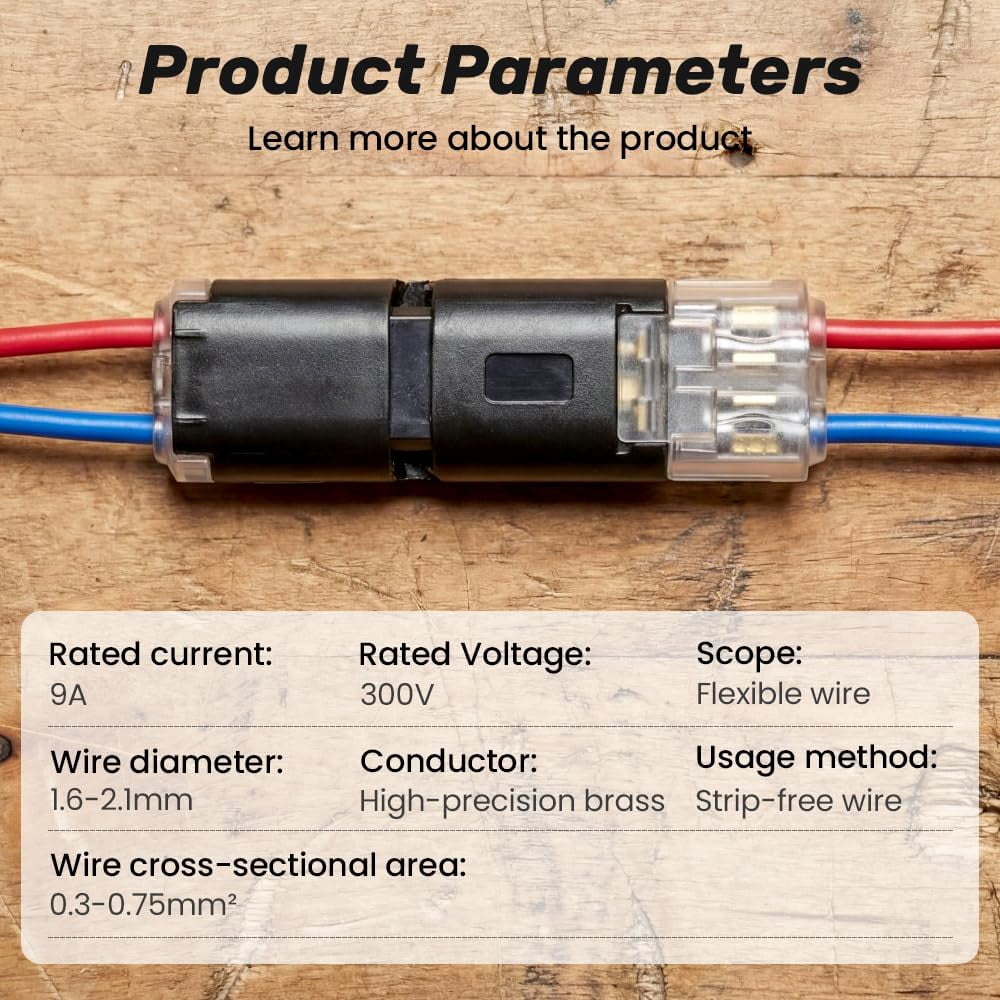
<p>Stop twisting wire nuts and hunting for electrical tape – upgrade to a safer, faster connection</p> <p>Electrical repairs can be frustrating. Wire nuts are bulky, hard to twist in tight spaces, and can loosen over time with vibration. Crimp connectors require a special tool that you never have when you need it. The Dual-Wire Insert-Type Wire Connector with Locking Latch solves these problems with a simple push‑and‑lock design.</p> <p>How it works</p> <p>Each connector has two insertion ports designed to accept one wire each (often color‑coded or numbered). After stripping about 5–8 millimeters (¼ inch) of insulation, you push the bare wire into its port until it stops. Then you close the built‑in locking latch. The latch compresses a internal metal contact or spring mechanism that grips the wire tightly and maintains electrical continuity. The pressure is consistent and secure, unlike a screw terminal that can loosen.</p> <p> </p> <p>Flame‑retardant construction</p> <p>Electrical sparks or overloads can generate heat. Cheap connectors made from recycled plastic can melt and potentially catch fire. These connectors are manufactured from flame‑retardant polyamide (PA66) or similar material rated UL94 V‑0 or V‑2 (check your specific product labeling). That means the connector is self‑extinguishing – if the surrounding materials ignite, the connector won‘t continue to burn. For home wiring or automotive use, this is a non‑negotiable safety feature.</p> <p>Where to use these connectors</p> <p>Home electrical repairs: Connecting ceiling light fixtures, replacing wall switches, extending lamp cords, repairing holiday light strings, or fixing a dishwasher or garbage disposal wire that broke.</p> <p>Automotive & trailer wiring: Installing a backup camera, trailer light harness, fog lights, or repairing a broken wire under the dashboard. The locking latch withstands road vibrations.</p> <p>RV & boat: Low‑voltage DC circuits (12V/24V) for interior lights, water pumps, or fans. The corrosion‑resistant internal metal (typically tin‑plated brass) resists moisture better than bare copper nuts.</p> <p>Emergency roadside fixes: If a wire snaps in your engine bay, you can repair it in minutes without cutting tools beyond wire strippers. No soldering iron required.</p> <p>Workshop & appliance repair: Test circuits temporarily, connect power supplies, or fix a broken toaster or coffee maker cord.</p> <p>Electrical ratings (typical)</p> <p>Wire range: 18–22 AWG solid or stranded (verify listing)</p> <p> </p> <p> </p> <p>Always check the product packaging for exact specifications. Do not exceed rated voltage or current.</p> <p>How to use: step‑by‑step</p> <p>Strip the wires – remove about ¼ inch (5‑8 mm) of insulation. Do not nick the copper strands.</p> <p>Open the locking latch – lift the latch to the open position (usually perpendicular to the connector body).</p> <p>Insert wires – push each stripped wire fully into its designated port. You should feel a slight resistance as the internal spring or contact grips.</p> <p>Close the locking latch – press the latch down flat. You‘ll hear or feel a click. The wire is now locked.</p> <p>Test – give each wire a gentle tug. It should not pull out. If it does, re‑strip to a clean length and re‑insert.</p> <p> </p> <p> </p> <p>These connectors are intended for low‑voltage to standard household voltage (120V AC) when specifications permit. For mains wiring (120V/240V), follow local electrical codes. Many code bodies allow push‑in or lever connectors for junction boxes. Always turn off power before working on any live circuit.</p> <p> </p> <p> </p>
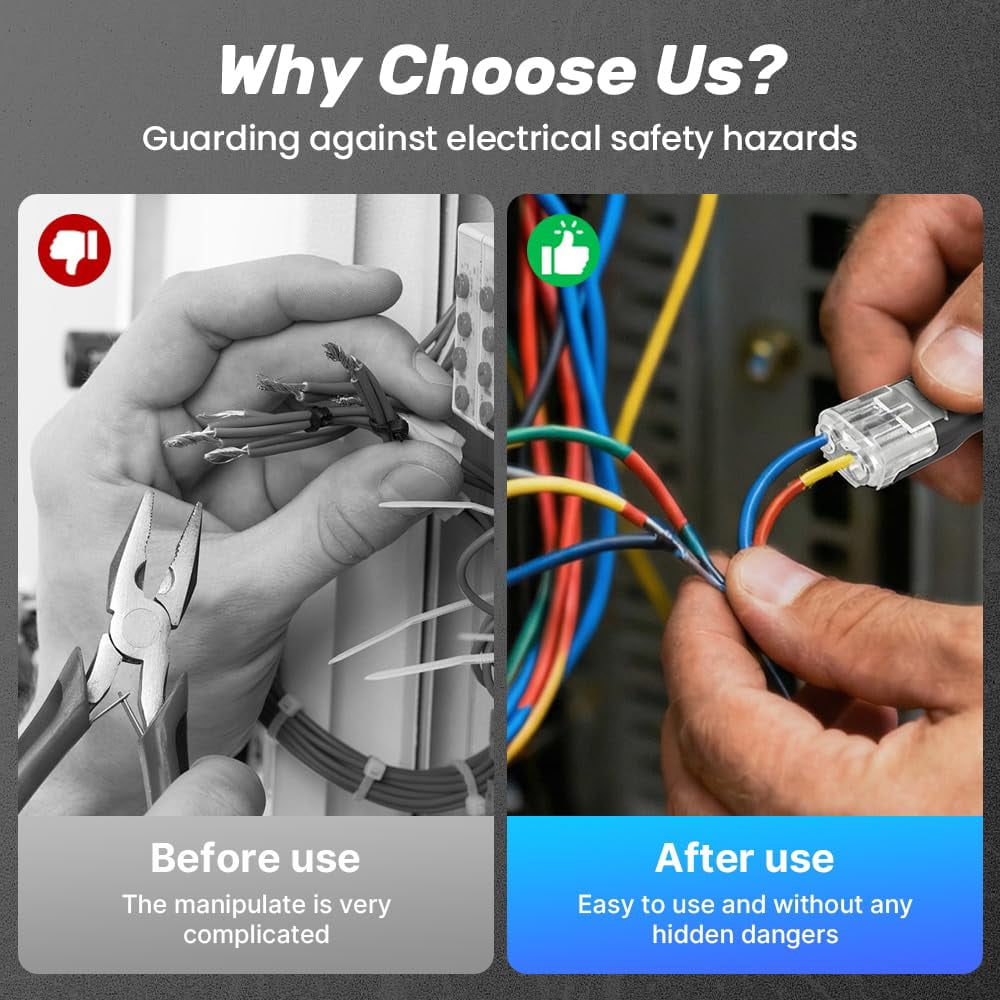
- 【DUAL-WIRE INSERT DESIGN】 Accepts two wires simultaneously (solid or stranded, 22–14 AWG typical). Simply strip, insert, and lock – no twisting, no soldering, no tape. Creates a secure electrical connection in seconds.
- 【LOCKING LATCH FOR VIBRATION RESISTANCE】 Features a built‑on locking latch that snaps shut to hold wires firmly in place. Prevents pull‑out from vibration or movement – ideal for automotive, RV, boat, or appliance repairs where standard wire nuts fail.
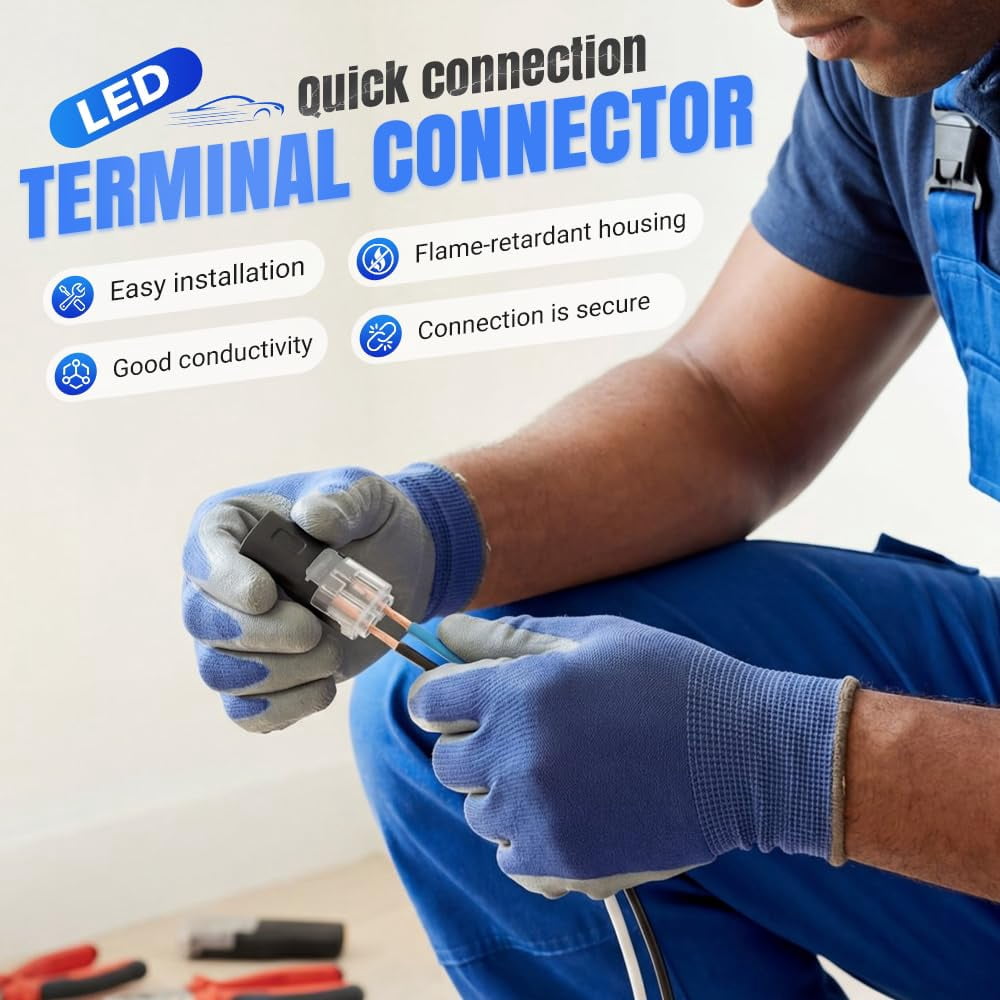
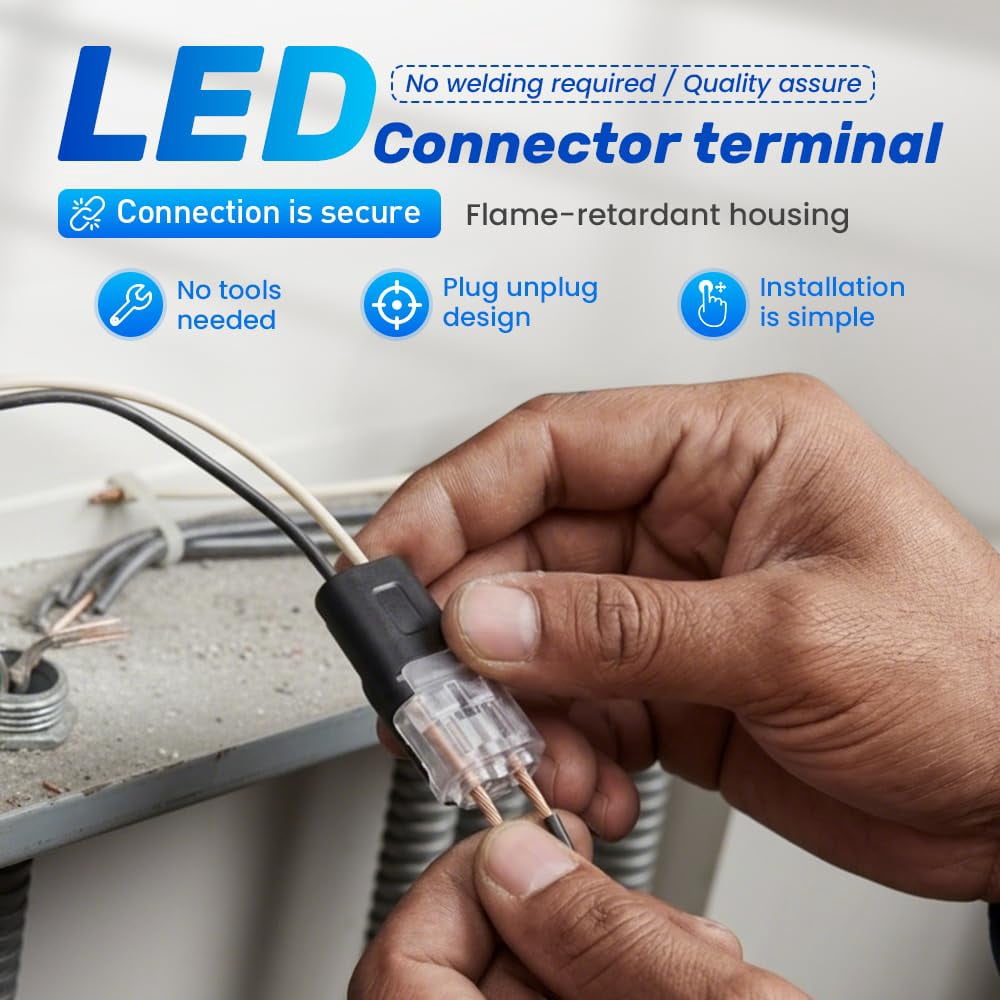
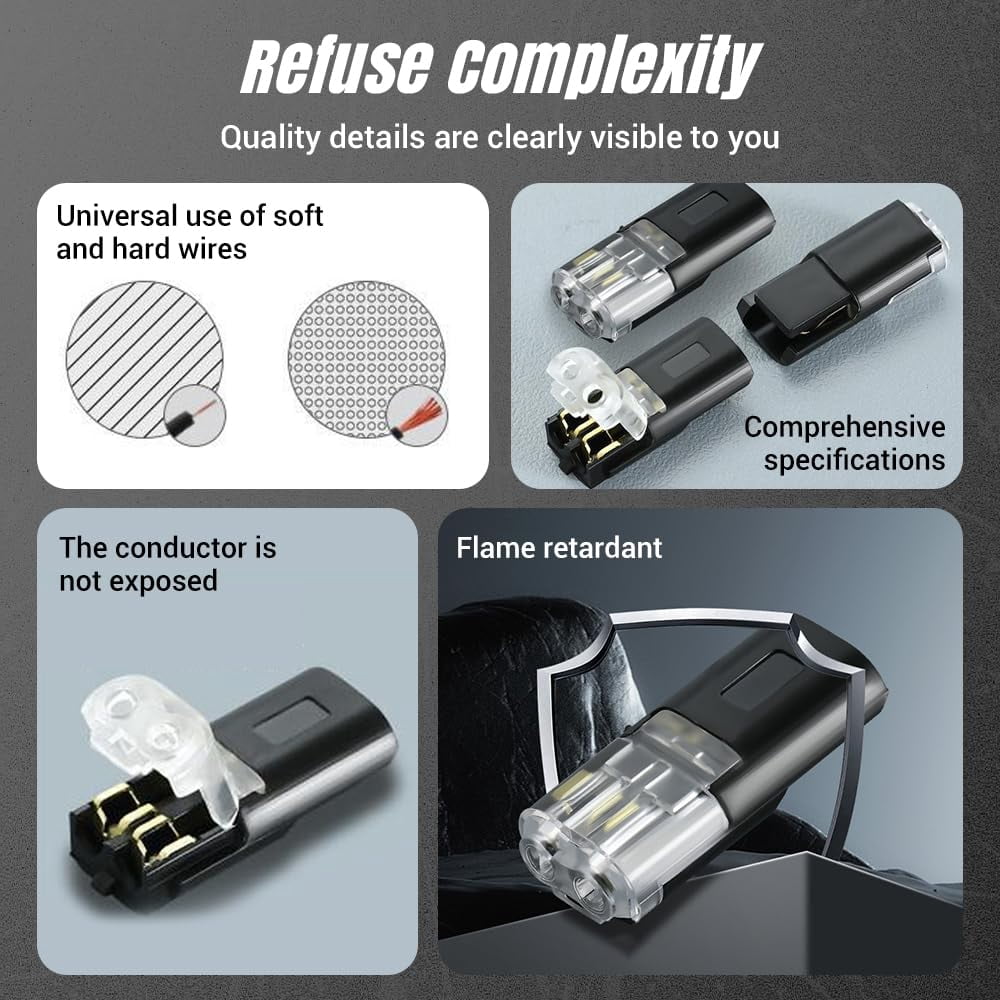
- 【FLAME-RETARDANT & SELF-EXTINGUISHING】 Made from high‑grade engineering plastic (PA66 or similar) with UL94 V‑0 or V‑2 flame‑retardant rating. Safe for use near heat sources, engines, or household circuits. Adds critical safety to any electrical repair.
- 【QUICK-CONNECT – NO TOOLS REQUIRED】 Strip wire about 5‑8 mm, push fully into the connector, then close the locking latch. That‘s it. No screwdriver, crimper, or heat gun needed. Perfect for emergency roadside fixes, holiday lights, or last‑minute home projects.
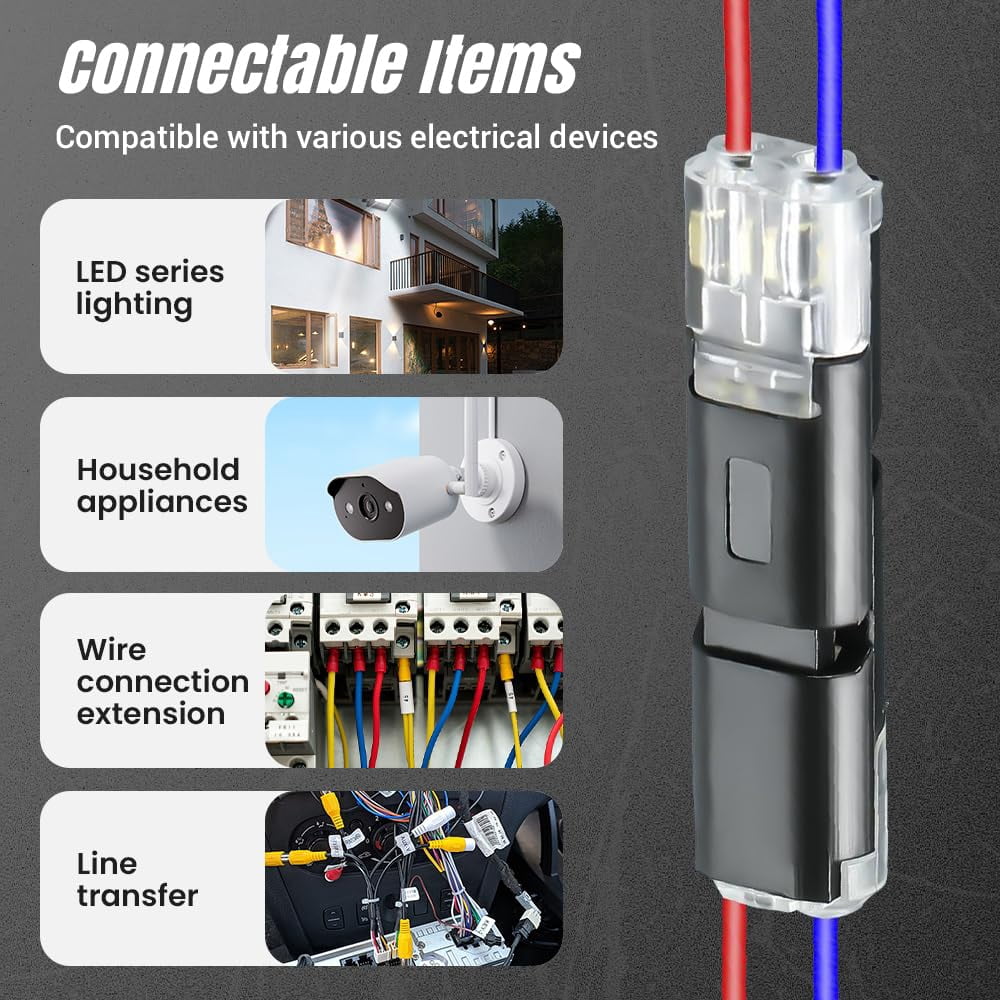
- 【WIDE APPLICATION: HOME, AUTO, WORKSHOP】 Works for ceiling lights, switches, thermostats, car audio, trailer wiring, small appliances, and low‑voltage DC circuits. Reusable (open latch, release wires, and reuse the connector). A must‑have for every toolbox.
| Brand | Unbranded |
|---|---|
| Color | Black |
| Has nrtl listing certification | N |
Bestseller ranking
Soldering Accessories
Customers who viewed this product also viewed
Hockey


Correction of product information
If you notice any omissions or errors in the product information on this page, please use the correction request form below.
Correction Request Form